What Is HS Code 731815? A Practical Look Through Real-World Import Data
In global trade, HS Code 731815 is one of the most frequently used classifications for iron or steel fasteners. Officially, it covers “other screws and bolts, whether or not with their nuts or washers.” This heading includes a vast array of externally threaded fasteners — from heavy-duty construction bolts to precision automotive screws. But understanding the code purely from a tariff book can leave critical gaps. To truly grasp how 731815 operates in real supply chains, it helps to examine actual shipment records from the companies that move billions of these parts across borders.
Official scope of 731815 under the Harmonized System
Under Chapter 73 of the Harmonized Tariff Schedule, 731815 groups threaded fasteners made of iron or steel that are not explicitly categorized under more specific subheadings like coach screws (731811), wood screws (731812), or screw hooks (731813). It is a broad residual category that includes standard hex bolts, machine screws, captive fasteners, and even certain specialty items, provided they are not self-tapping or designed for railways. The exact subheading structure varies by country, but the core definition remains consistent: externally threaded metal parts designed to assemble components, often accompanied by matching nuts or washers within the same shipment.
Despite this clarity, misclassification still plagues importers. A slight variation in material, function, or packaging can push an item into a neighboring code — with costly consequences.
How industry leaders actually use 731815: a view from TradeMagellan's database
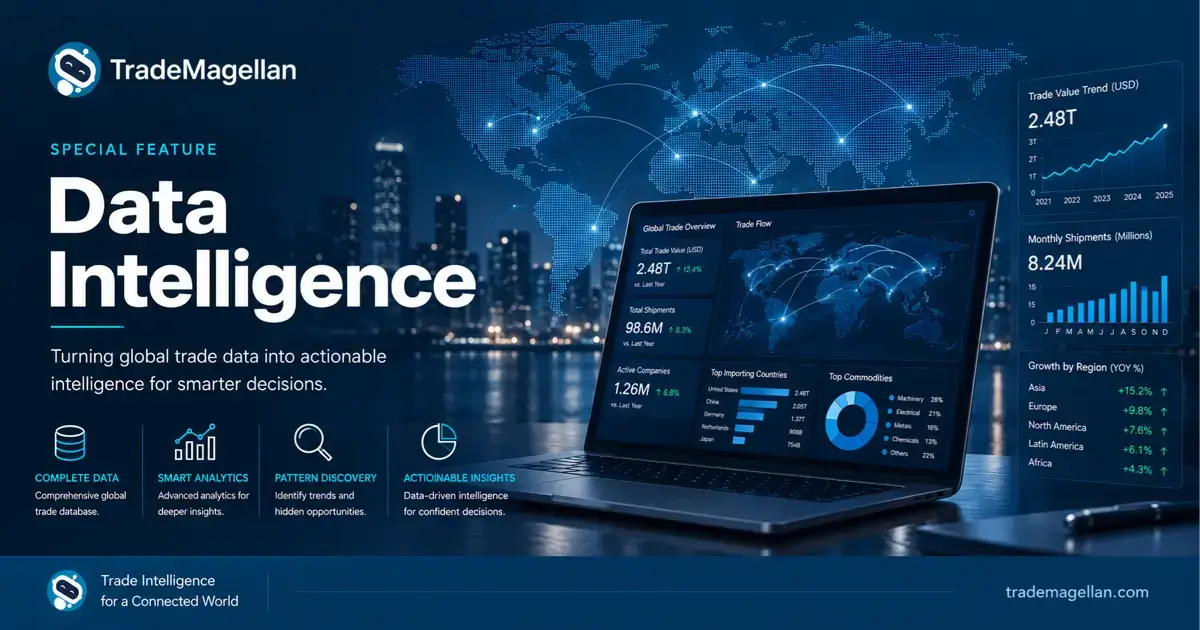
TradeMagellan's customs data model aggregates millions of bills of lading, revealing the practical classification strategies of global manufacturers and distributors. When we filter for HS 731815, a clear pattern emerges around key players who rely on this code for their day-to-day cross-border operations.
Shipment examples under HS 731815
- STELFAST INC. – a distributor known for bulk fastener supply – consistently declares “BOLT” and “SCREW” under this code, often with generic product descriptions that match the tariff wording.
- VOLKSWAGEN DE MEXICO S.A. DE C.V. – the Mexican manufacturing arm of the automotive giant – uses 731815 for precision fasteners imported for vehicle assembly, frequently described as “SCREW” or detailed by material grade.
- INDIANA AUTOMOTIVE FASTENERS INC. – specializing in automotive supply chains, this company labels its 731815 entries with precise designations like “SS FASTNER OTHER SCREWS AND BOLTS,WHETHER OR NOT WITH THEIR NUTS OR BOLTS( GRADE 1.4404A )” — a clear reference to 316L stainless steel.
- SPAN DE MEXICO S.A. DE C.V. and VELIM S.A. DE C.V. — both appear as regular importers, moving mixed assortments of bolts and screws under the same heading, often without separating sub-components.
The repeated appearance of GRADE 1.4404A (corresponding to AISI 316L, a molybdenum-alloyed stainless steel) in these records underscores an important nuance: the code does not differentiate by steel grade. A commodity carbon-steel bolt and a high-spec 316L automotive fastener can both sit legally under 731815 — yet the compliance documentation demands accurate material descriptions to avoid secondary scrutiny.
Who are the major importers leveraging 731815?
The five companies mentioned above represent distinct facets of the fastener import ecosystem. STELFAST INC. exemplifies large-scale distribution, where classification speed and consistency reduce friction at ports. Volkswagen de México, on the other hand, shows how just-in-time automotive manufacturers rely on 731815 for production-critical components being shipped from European or Asian suppliers into Mexico. Indiana Automotive Fasteners and the two Mexican entities (SPAN, VELIM) highlight the regional specialization that can develop around certain HS codes — a pattern often invisible without detailed trade data.
What this means for your own classification strategy is straightforward: if industry leaders with well-resourced compliance departments consistently classify stainless steel bolts, machine screws, and assembled fastener kits under 731815, then adopting the same logic provides a reliable benchmark.
The hidden cost of misclassification and how to benchmark correctly
Misclassifying a product — for example, placing a self-tapping screw under 731815 instead of the correct 731814, or confusing a coach screw with a standard bolt — can trigger a cascade of problems: delayed clearance, retrospective duty demands, and even penalties. Customs authorities worldwide are intensifying audits of Chapter 73 items precisely because the volume is so high and the descriptions often ambiguous.
By examining how giants like STELFAST and VW de México describe their goods, importers can build a defensible internal reference library. TradeMagellan's trade intelligence platform allows users to slice data by any combination of HS code, company name, product keyword, and country pair, making it straightforward to identify exactly how peers and competitors word their declarations. That kind of competitive benchmarking isn't just about copying — it's about risk-adjusted compliance.
Stainless steel fasteners and the 1.4404 (316L) grade: a special focus
The repeated mention of grade 1.4404A in 731815 declarations is no coincidence. 316L stainless steel fasteners are used extensively in marine, chemical processing, and high-corrosion environments — and they often carry a price premium that makes them more scrutinized by valuation auditors. Importing them under 731815 without a clear material note can raise red flags, whereas a detailed description matching the commercial invoice reinforces transparency.
If your supply chain involves high-performance stainless fasteners, observing how Indiana Automotive Fasteners and others structure their product descriptions provides a practical template. It also protects against accusations of undervaluation, because the grade directly correlates with a higher transactional value.
Making 731815 work for your import strategy
Rather than treating HS codes as static regulatory boxes, top-performing importers treat them as dynamic tools that, when applied consistently with industry benchmarks, can streamline logistics and reduce tariff engineering risk. The real-world data from TradeMagellan confirms that 731815 is the go-to code for a broad range of externally threaded fasteners, provided they are iron or steel and not caught by a more specific provision.
Whether you are shipping standard carbon steel bolts or high-spec 316L screws, aligning your classification with the documented patterns of market leaders offers a clear pathway to fewer disputes and faster clearance. TradeMagellan's proprietary customs data allows you to audit your own HS assignments against millions of actual transactions, turning classification from a guessing game into a data-driven function.
For a deeper dive into specific importer filings or to analyze how your own products compare, explore our HS 731815 intelligence dashboard and see the live trade flows behind the statistics.