HS Code 950300: The Classification Behind Dolls, Toy Sets and Jigsaw Puzzles in Global Trade
For anyone involved in importing or exporting toys, puzzles and traditional playthings, HS Code 950300 is one of the most frequently encountered customs classifications. Yet a narrow reading of the official tariff definition misses the real picture of what flows through global supply chains under this code. Drawing on actual shipment records analyzed by TradeMagellan’s trade data platform, we can see exactly how industry leaders like Mattel, Richwell Industrial and Schylling declare their products — and why studying their strategies helps reduce costly misclassification.
What the Code Officially Covers
Under the Harmonized System, heading 9503 covers “tricycles, scooters, pedal cars and similar wheeled toys; dolls’ carriages; dolls, other toys; reduced-size (‘scale’) models and similar recreational models, working or not; puzzles of all kinds.” The code is intentionally broad: it captures classic dolls, action figures, toy sets (including construction or educational kits), jigsaw puzzles, and a wide array of non‑electronic playthings made from plastic, wood, textile or metal. Products primarily intended for adult collectors also fall here if they retain the character of toys or models.
How the World’s Biggest Toy Shippers Use 950300
The official wording provides the framework, but actual bill of lading data reveals how major corporations translate that framework into documentation. TradeMagellan’s analysis of customs filings shows that some of the largest import‑export players consistently use HS 950300 for three core product categories — and they do so with remarkably consistent language.
| Company | Declared Product on Shipments |
|---|---|
| MATTEL INTERNATIONAL OPERATIONS LTD | DOLL |
| INTERNATIONAL PROMOTIONS LEADERSHIP | TOY SET |
| COMERCIALIZADORA MEXICO AMERICANA S. R.L. DE C.V. | TOY SET |
| RICHWELL INDUSTRIAL CO.,LMITED | JIGSAW PUZZLE |
| SCHYLLING INC. | TOY SET |
The descriptions, taken directly from shipping manifests, are deliberately concise but precise — “DOLL”, “TOY SET”, “JIGSAW PUZZLE”. This kind of clarity is not accidental. Customs authorities in the US, EU and Asia increasingly employ automated targeting systems that flag vague or inconsistent descriptions. By consistently matching the product to the basic category described by 950300, these companies reduce clearance friction and inspection delays.
Why Watching the Leaders Reduces Misclassification Risk
Misclassification is one of the most expensive avoidable mistakes in international trade. When a shipment is assigned the wrong HS code, the consequences can include back duties, fines, cargo holds and even loss of trusted trader status. A large toy retailer, for example, may import a “doll” and its accompanying “toy set” accessories under two separate codes, but if both items are principally playthings, 950300 usually applies to the whole kit.
A real‑world lesson from puzzle shipments
Jigsaw puzzles are a classic 950300 item, but when a puzzle is accompanied by an educational booklet or marketed as an adult brain trainer, some shippers mistakenly lean toward 4901 (printed books) or 9504 (games). TradeMagellan’s data shows that Richwell Industrial Co.,Limited, a major puzzle supplier, repeatedly uses 950300 even for complex adult puzzles — a signal that customs authorities in major markets accept this treatment when the essential character remains that of a puzzle.
Applying the leader playbook to your own shipments
Companies that benchmark their HS assignments against industry giants operating in the same lane tend to experience fewer entry rejections. This is not about copying another importer’s paperwork blindly; it is about validating your product’s classification logic against thousands of successful clearances. If MATTEL INTERNATIONAL OPERATIONS LTD, one of the world’s largest toy companies, consistently uses 950300 for dolls and toy sets, a smaller importer can be confident that the same code is defensible — provided the product genuinely fits the heading.
Beyond the Code: How TradeMagellan Turns Shipment Data into Compliance Edge
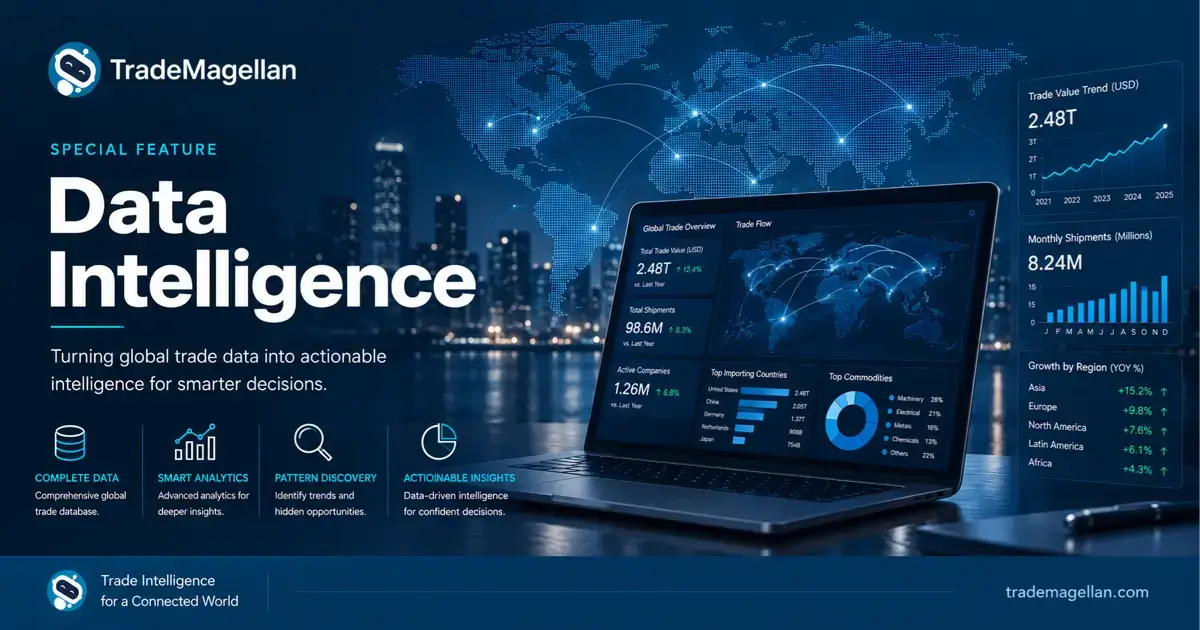
TradeMagellan’s platform aggregates millions of customs records to surface exactly this kind of intelligence: which HS codes actually move certain products, which shippers dominate specific lanes, and how product descriptions are worded in practice. For a 950300 analysis, the system can reveal:
- Top exporters and importers using the code in any region
- Year‑over‑year volume trends for dolls versus puzzles versus toy sets
- Port‑level data showing which entry points enforce tighter description norms
- Peer comparisons that help an SME align with multinational practices
The goal is not to replace a customs attorney or tariff engineer, but to equip trade professionals with empirical evidence that reduces guesswork. When a classification decision can be backed by data showing that a company like Schylling Inc. clears identical merchandise without incident, the conversation with a customs broker becomes much simpler.
Are your toy shipments under HS 950300 correctly classified? TradeMagellan’s global trade data lets you see how your competitors and industry benchmarks describe their products on actual bills of lading. Explore shipment details by company, product keyword or HS code to strengthen your customs compliance. View live 950300 trade data.