HS Code 610230: How JanSport and The North Face Classify Knit Jackets
Understanding the Official Scope of HS 610230
Harmonized System code 610230 covers women’s or girls’ overcoats, car-coats, capes, cloaks, anoraks (including ski-jackets), wind-cheaters, wind-jackets and similar articles, knitted or crocheted, of man-made fibres. In plain terms, if a garment is a knitted outer layer with synthetic yarns such as polyester and is designed for women or girls, it very often lands inside 610230. Customs authorities globally rely on this six-digit heading to ensure uniform tariff treatment and to gather trade statistics on synthetic knit outerwear.
Despite its apparent clarity, the real world of global logistics adds nuance. Fabrics, finishes, linings and even the intended use can shift a product to a different code. That is why seeing how industry leaders actually file their declarations provides a practical compass—and that is exactly what the TradeMagellan customs intelligence database reveals.
What the Data Shows: Global Brands Filing Under 610230
TradeMagellan’s proprietary shipment records highlight a group of high-profile importers and suppliers that consistently use HS 610230 for specific knitted polyester jackets. In our latest extract, five entities stand out:
- GOBOLT
- IMPORTADORA PRIMEX S.A. DE C.V.
- ENSENADA TEXTILES S. R.L. DE C.V.
- JANSPORT A DIVISION OF VF OUTDOOR
- THE NORTH FACE FAO ANDREA TURATI VI
These names represent a mix of logistics operators, specialist importers and iconic outdoor apparel brands. Their customs filings show that the merchandise described as “Knitted Polyester Jackets” was consistently classified under 610230. Although trade data does not disclose every internal specification, the repeated use of this code by such experienced players is a strong signal that the garments met the core criteria: knitted construction, man-made fiber composition and a women’s/girls’ outerwear character.
Sample declared product descriptions associated with HS 610230:
Knitted_Polyester_Jackets SKU-9188425-88335_AJA
Knitted_Polyester_Jackets SKU-0139780-80321_AJA
Knitted_Polyester_Jackets SKU-1298453-15986_AJA
Source: TradeMagellan global customs records, 2024–2025 sample
The presence of household names like JanSport and The North Face is particularly instructive. Both brands operate complex supply chains and maintain rigorous compliance departments; an incorrect tariff classification at scale could lead to significant duty overpayments, shipment holds or audits. Their established reliance on 610230 for these articles offers a benchmark that other importers can study—without needing to reinvent the wheel.
Key insight: When a multinational consistently assigns a specific HS code across multiple shipments, it is rarely a coincidence. It usually reflects a legal review, advance rulings or a well-documented product specification that others can reference.
Why Monitoring Classification Leaders Reduces Your Risk
Misclassification is one of the most expensive and avoidable errors in international trade. Penalties, back-duty assessments and cargo delays can quickly erode margins. By examining real-world filings from companies like JanSport and The North Face through the TradeMagellan platform, importers and customs brokers gain a practical reference layer that complements tariff books and rulings.
Instead of starting from scratch, a compliance team can look at how comparable products are actually being cleared at borders. For instance, if your company is about to import a women’s knitted polyester anorak, seeing that similar jackets from VF Outdoor or The North Face are routinely declared under 610230 can validate your classification choice or flag a discrepancy worth re-examining. This peer-group calibration is especially valuable when product lines sit near the border of two HS codes—which happens frequently with activewear and hybrid styles.
Three Ways to Leverage This Data
- Benchmark against industry leaders: Identify which HS codes are used by the top 10 importers of your exact product category. If your classification differs, investigate why.
- Detect inconsistency early: Spot whether the same supplier uses different codes for identical-looking goods in different markets. This often reveals a correction opportunity before authorities react.
- Strengthen internal documentation: When seeking binding rulings or defending an audit, referencing observable industry practice—backed by actual shipment records—adds a layer of credibility to your argument.
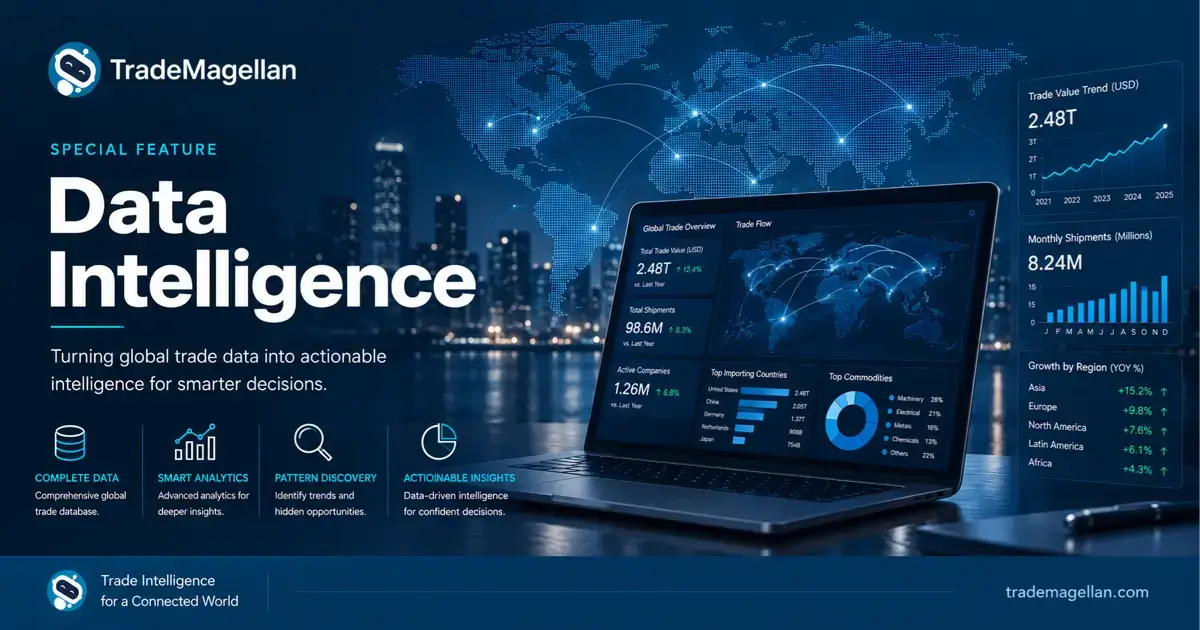
TradeMagellan’s global database allows you to search by HS code, product description, supplier or importer, filtering millions of records to surface patterns that would otherwise stay hidden. The five firms highlighted above are just a snapshot; thousands more entities file under 610230, each carrying a potential lesson for your own supply chain.
A Practical Compliance Shortcut—with a Caution
While observing how giants classify their goods is powerful, it does not replace a thorough product analysis. A jacket with a membrane, electric heating elements or a different blend of fibers might shift to another HS bracket. The value of trade intelligence is that it sharpens your own judgment: it shows you what the market consistently accepts, so you can spot when your situation truly deviates. Used judiciously, the data transforms classification from an abstract guessing game into a fact-based, defensible process.