HS 620640: Women's Blouses in Global Trade Data
What Exactly Is HS Code 620640?
HS Code 620640 sits within Chapter 62 of the Harmonized System, which covers apparel and clothing accessories made from woven fabrics – not knitted or crocheted. Specifically, 620640 defines women’s or girls’ blouses, shirts and shirt‑blouses manufactured from man‑made (synthetic or artificial) fibres. The categorisation turns on two key elements: the gender and age demographic (female, including girls) and the fibre composition. While the word “man‑made” can sound technical, in trade practice it regularly embraces polyester, nylon, viscose, rayon, modal and similar chemically produced fibres. Customs authorities worldwide use this six‑digit code as a universal language, enabling consistent tariff treatment and statistical monitoring of global garment flows. For many fashion‑oriented supply chains, 620640 represents one of the most active tariff lines.
Real‑World Data: How Industry Giants Classify Under 620640
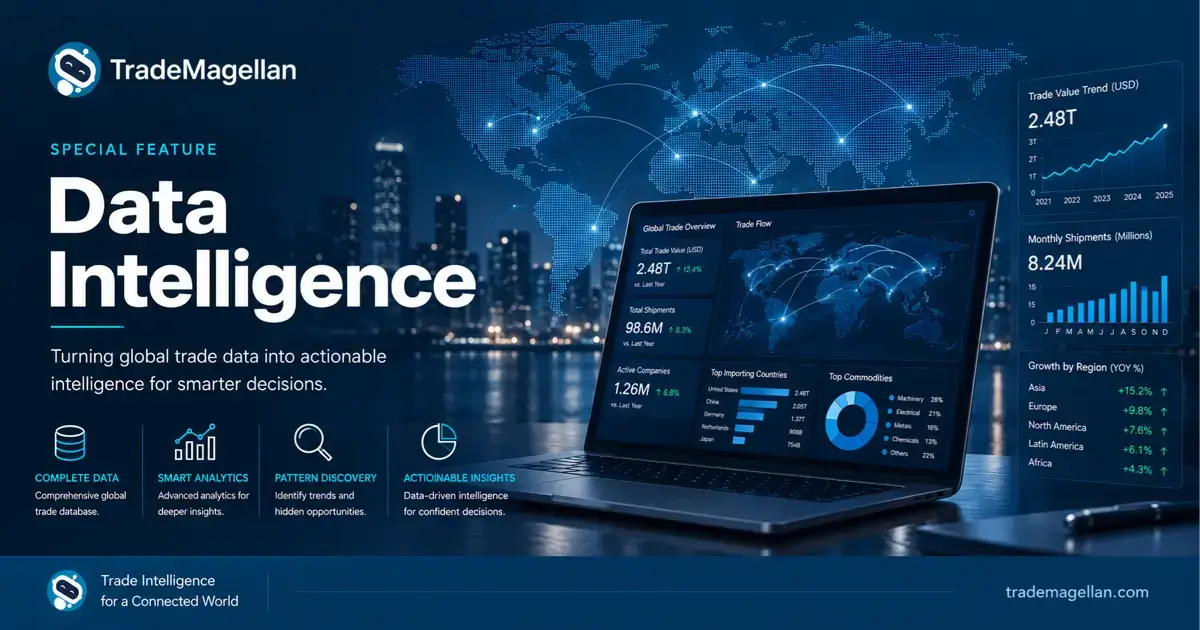
Official definitions are merely the starting point. The true picture emerges when we examine how major commercial players actually declare their goods on shipping documents. TradeMagellan’s proprietary customs‑data model reveals clear patterns from billions of transactional records. Not only fashion retailers but also large‑scale global manufacturers and import‑export houses rely on this very code for standard women’s woven tops.
TradeMagellan Shipment Evidence – Key Declarants:
- GG INTERNATIONAL CO LTD
- H&M HENNES & MAURITZ GBC AB
- GG INTERNATIONAL MANUFACTURING CO. LTD.
- IMPORTADORA PAMERVAL CIA.LTDA.
- SUBURBIA S. R.L. DE C.V.
Products declared under HS 620640 by these entities include:
- WOMENS SHIRT
- 100% VISCOSE WOVEN LADIES BLOUSE
- LADIES WOVEN BLOUSE
The diversity of the declarants is instructive. GG INTERNATIONAL CO LTD and its manufacturing affiliate appear as large‑scale Asian‑based exporters, while H&M acts as a European fast‑fashion buyer. Meanwhile, IMPORTADORA PAMERVAL and SUBURBIA represent Latin American retail and distribution channels. Despite their different positions in the supply chain, all of them align on the same tariff heading. The product descriptions, although not identical – from the succinct “WOMENS SHIRT” to the more detailed “100% VISCOSE WOVEN LADIES BLOUSE” – share the common characteristics of female‑oriented woven tops made of man‑made fibres. TradeMagellan’s data confirms that these filings correspond to actual containerised movements, not isolated samples, giving the classification a robust empirical grounding.
Why Following Giants’ Classification Strategies Lowers Misclassification Risk
For importers, exporters and customs brokers, tariff classification carries tangible financial and legal consequences. An incorrect HS code can trigger penalty assessments, shipment holds, post‑clearance audits and even retrospective duty demands. The experience of global enterprises – which invest heavily in trade compliance teams, legal review and automated classification tools – provides a practical safety benchmark.
When you observe that H&M, a brand with rigorous vendor guidelines, consistently enters its viscose‑woven blouses under 620640, it signals that the code has survived scrutiny across multiple jurisdictions. Similarly, the repeated use by GG INTERNATIONAL CO LTD, a major garment exporter, indicates that freight forwarders and destination customs brokers have accepted the classification without systemic disputes. By referencing these real‑world precedents in TradeMagellan’s database, smaller traders can validate their own classification logic before goods reach the border. This approach does not replace professional legal advice, but it dramatically reduces the chance of an off‑the‑shelf misstep.
Practical Guidance: Making 620640 Work for Your Shipments
To apply the lessons from frontier trade data, start by mapping your actual product characteristics against the consistent features seen in the giant‑company declarations: the garment must be a woven (not knitted) blouse, shirt or shirt‑blouse for women or girls, and the outer shell fabric should be predominantly man‑made fibre. If your item is a blend, follow the rule of predominant weight – a viscose‑linen mix with more viscose can still land here. Always keep commercial invoices and fabric‑content labels clear and specific; ambiguous descriptions like “ladies top” often trigger customs queries that could push a shipment into a different code.
TradeMagellan’s supply‑chain intelligence unit continues to monitor live entries under 620640, detecting shifts in sourcing geographies and new product nomenclature. By staying connected to actual shipment data rather than relying solely on theoretical tariff schedules, supply chain professionals can build a defensible, audit‑ready import programme.