How Industry Giants Use HS Code 392390 for Plastic Packaging: Real-World Declarations
Beyond the Definition: Why 392390 Matters in Global Trade
Harmonized System code 392390 is officially described as “articles for the conveyance or packing of goods, of plastics; stoppers, lids, caps and other closures, of plastics.” Unlike the more specific subheadings for sacks and bags (392321 and 392329) or carboys and bottles (392330), 392390 captures a broad range of plastic packaging and transport items that do not fall neatly into those categories. In practice, this means containers, pallets, boxes, crates, thermoformed trays, protective caps and even specialized liners can be classified here—making the code a critical node for supply chain managers and customs compliance teams.
Trade Reality: How Global Leaders Declare Under 392390
The literal tariff wording only tells half the story. Customs data reveals that multinational corporations routinely declare products under 392390 that might seem ambiguous to a reader relying solely on the harmonized system text. At TradeMagellan, our supply chain intelligence unit continuously monitors customs filings from key industrial players, and the patterns are instructive.
Real-World Declarations by Industry Giants
| Company | Product Declared as HS 392390 | Sector |
|---|---|---|
| DICASTAL MEXICO S. R.L. DE C.V. | Plastic Bag | Automotive lightweight components / logistics |
| HANKOOK TIRE MANUFACTURING | Polybag | Tire manufacturing & global distribution |
| FLEXIBLE PACKAGING PTE LTD | Polybag | Flexible packaging solutions |
| FURUKAWA AUTOMOTIVE SYSTEMS LIMA | Returnable Plastic Pallet (PT11) | Automotive wire harness systems |
| SYNCREON SPEYER | Returnable Plastic Pallet (PT11) | Contract logistics & supply chain management |
The table above illustrates a pragmatic truth: companies like DICASTAL MEXICO and HANKOOK TIRE classify items such as plastic bags and polybags under 392390, even though dedicated bag codes exist. This often occurs because the bags are specially designed as inner packaging for industrial components, integrated into a returnable transport system, or simply because the trade community in their region routinely uses 392390 for such multipurpose plastic packaging. Similarly, FURUKAWA AUTOMOTIVE SYSTEMS LIMA and SYNCREON SPEYER channel returnable plastic pallets through 392390—these durable, reusable pallets are exactly the type of “articles for conveyance” that the code envisions, yet many traders still hesitate between 392390 and other transport equipment headings.
What’s significant is not merely what is declared, but who is declaring it. These are companies with deep customs expertise and rigorous internal audit processes. Their consistent use of 392390 for such goods signals a market‑accepted classification practice that can inform smaller or less experienced shippers.
Mitigate Misclassification by Mirroring Proven Strategies
Customs misclassification remains one of the most common causes of shipment delays, penalty fines, and post‑entry audits. For plastic packaging and transport items, the boundary between 392390 and adjacent codes (e.g., 392321, 392350, 4415) can be particularly troublesome. However, by studying the filing patterns of industry leaders, shippers can align their own tariff engineering with established commercial norms—significantly reducing exposure to compliance risk.
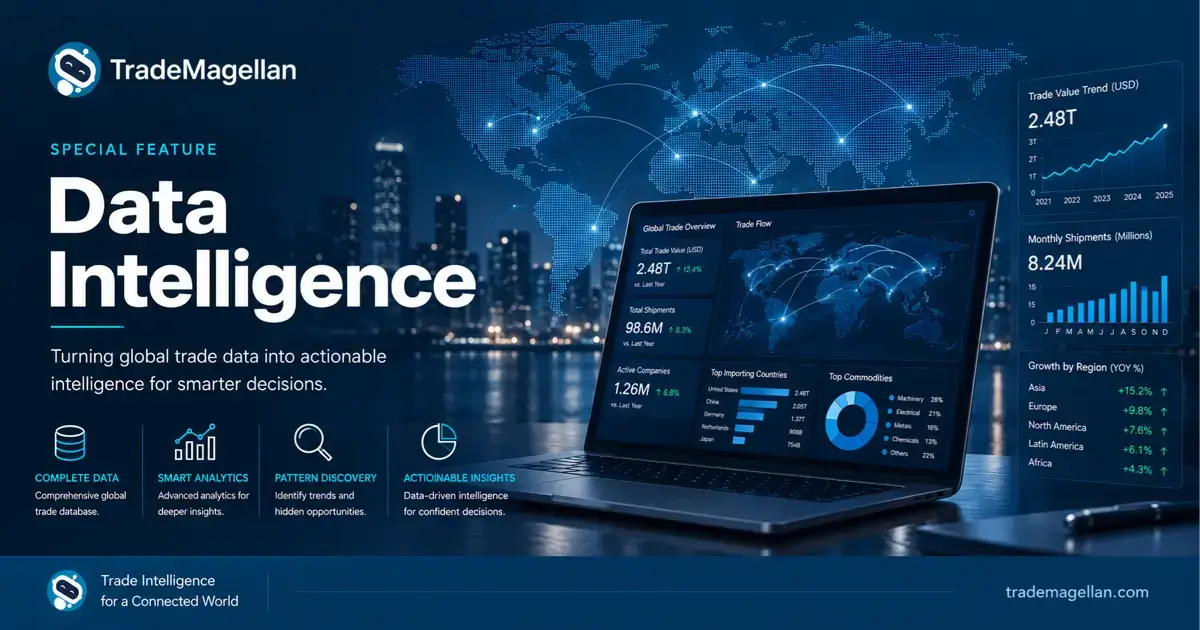
TradeMagellan’s analytics platform allows importers and exporters to benchmark their HS classifications against real‑world declarations from global enterprises. When you see that both a major tire manufacturer and a flexible packaging specialist repeatedly clear goods under 392390, you gain confidence that your similar product is unlikely to be challenged at the border. This evidence‑based approach helps avoid both under‑payment (which triggers back‑duties) and over‑payment (which erodes margins), while strengthening your documented reasonable care.
How TradeMagellan Helps You Stay Ahead
TradeMagellan equips supply chain, legal, and trade compliance teams with searchable, up‑to‑the‑moment customs declarations from 100+ countries. Instead of guessing which HS code a competitor or partner uses, you can query real shipments and uncover the de‑facto classification standard for any product—down to the exact importer, exporter, and item description. Our models also detect subtle shifts in usage patterns, alerting you before a trend becomes a compliance issue.
When dealing with plastic packaging goods like those documented above, the difference between smooth clearance and a customs hold often boils down to the HS code. Let the data from household‑name manufacturers guide your tariff decisions, and reduce the guesswork that plagues manual classification.