China Sourcing Playbook for SMEs: Mature Supply, Yantian Port & HS 420292
Written by a senior sourcing agent with 20 years of hands-on experience in Chinese manufacturer negotiations, factory audits and export logistics. If you are an SME procurement manager sourcing under HS 420292 — read this before you send your next RFQ.
Market Stage Analysis: Mature Sector, Buyer-Led Strategy
You are entering a Mature market. That is good news and bad news at the same time. The good news: the supply chain is exceptionally developed, with hundreds of experienced factories, well-established component suppliers and highly competitive pricing. The bad news: your supplier has likely seen dozens of buyers just like you, and they know exactly how to price a product differently depending on how professional you appear in the first email.
In this environment, the most effective procurement strategy is cost control through competitive bidding — the smart way. Do not simply bargain hard with one supplier and expect the best price. That is a rookie mistake. Instead, build a structured comparison framework using at least three to five qualified factories covering different scales and cost structures.
What "Mature Market" Actually Means for Your Sourcing Team
- Supplier options: Abundant. Hundreds of manufacturers around Guangdong, Zhejiang and Jiangsu can produce goods under HS 420292 (travel goods, handbags, similar containers). Your leverage is meaningful — use it.
- Pricing volatility: Low by global standards, but raw material price swings (PU leather, nylon, zippers, metal parts) still require quarterly price review clauses.
- R&D and design: Not your differentiator — most mature suppliers have in-house design teams. Outsource design to them but retain IP ownership explicitly in contract.
- Delivery reliability: Generally high for experienced suppliers — but you still need enforceable delivery penalties.
Key Focus for Mature Markets: Competitive Bidding
In a mature market, the threat is not "no supply" — it is paying too much, receiving inconsistent quality or accidentally sourcing from a trading company pretending to be a factory. All three risks are mitigated by effective competitive bidding and supplier verification.
- Create a detailed RFQ with exact specifications, allowed materials, tolerance limits and packaging requirements. Your RFQ quality determines bid quality.
- Require unit price breakdown by material, labor and overhead. This alone will filter out trading companies that do not have granular cost visibility.
- Request lead time for samples, for pre-production samples and for bulk production separately.
- Set clear payment terms, such as 30% T/T deposit and 70% against B/L copy. Consider L/C at sight for larger orders. Stick to it — this filters financially weak suppliers.
Logistics Optimization: Yantian Port as Your Strategic Export Gateway
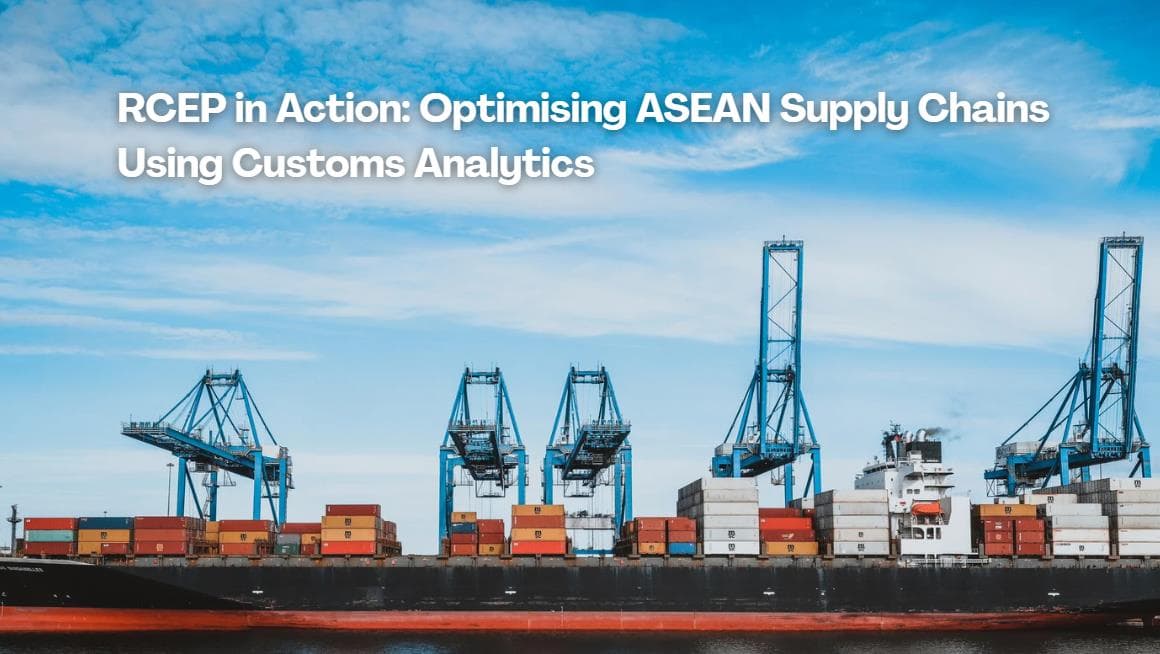
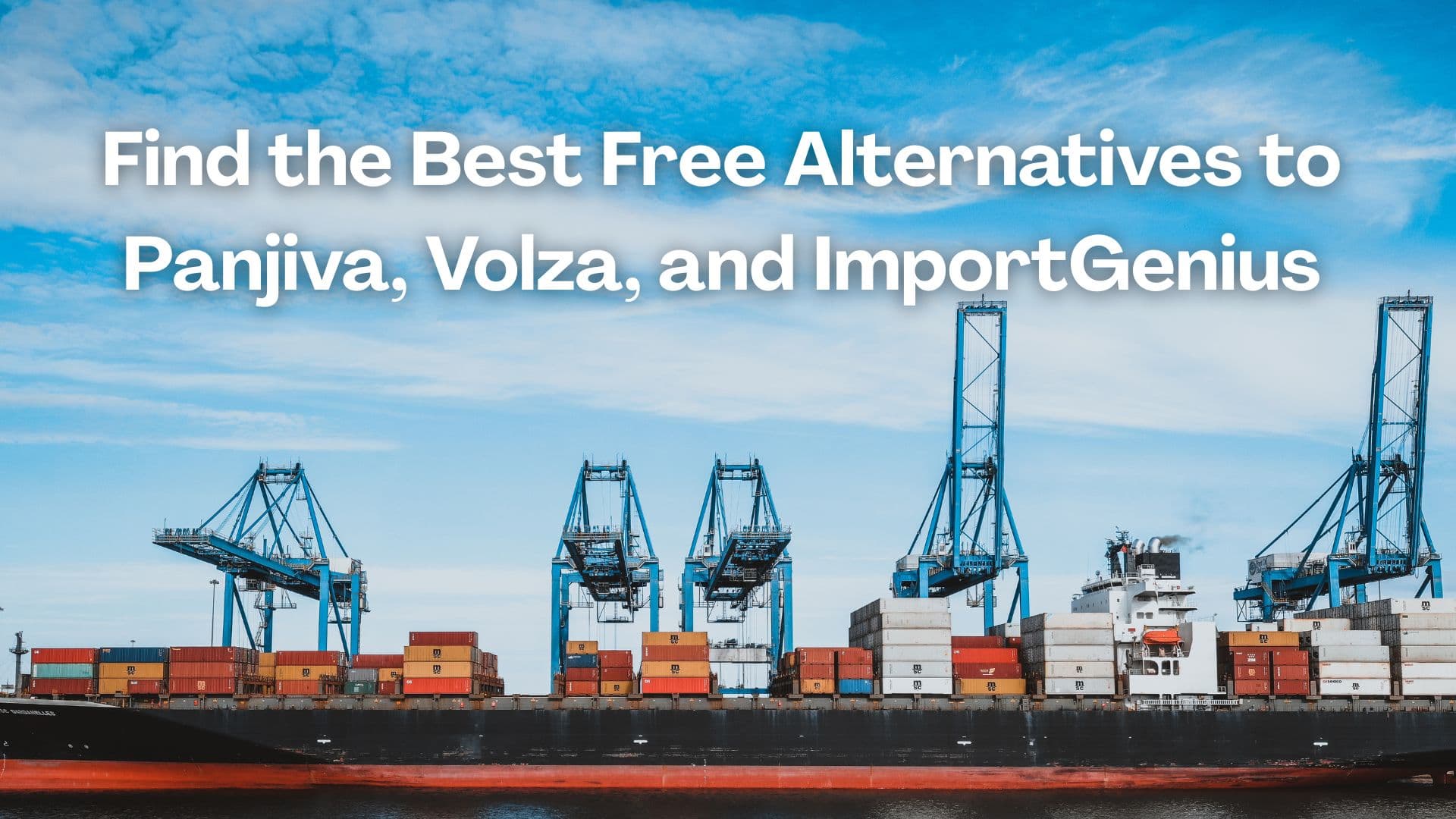
In the data provided, YANTIAN PT appears as a dominant export port — and that matches my 20 years of ground-level experience. Yantian (盐田) Port, located in Shenzhen, is one of the world's busiest container ports, and it is the hub for a substantial share of Guangdong's luggage, bag and travel goods exports.
Why Yantian is the right choice for HS 420292 shipments:
- Dense liner services: Yantian offers extremely high frequency sailings to North America, Europe and the Mediterranean. Missing one vessel is not a crisis — the next one arrives within days. That matters when your retail schedule is tight.
- Competitive ocean freight: Because carriers fill vessels at Yantian with high volumes of consumer goods such as handbags and luggage, economies of scale push freight rates down compared to smaller ports.
- Mature LCL (less-than-container-load) infrastructure: If your SME order volume is between 2 and 8 CBM, Yantian's LCL consolidation hub is well established. You can share container space with other shippers and still enjoy reliable weekly departures.
- Proximity to major manufacturing clusters: Factories in Shenzhen, Dongguan, Huizhou, and even parts of Guangzhou can truck goods to Yantian the same day or overnight. This shortens internal lead times and lowers domestic trucking cost.
FOB Yantian Terms: Negotiation Advice
When requesting FOB Yantian quotes, you must be very precise about who is responsible for what. Ambiguity is where costs creep back in.
- Confirm whether the quoted FOB price includes export customs clearance, port handling charges (THC) and documentation fees.
- Ask the supplier whether they can book the vessel, or whether you will nominate a freight forwarder. For SMEs, I recommend controlling the freight booking yourself. In a mature sourcing market you need supply chain control, and whoever controls the booking controls the schedule.
- Check the inland trucking distance from the factory to Yantian. Anything beyond a 3-hour drive adds meaningful risk; require that trucking and loading date be explicitly scheduled in the production plan.
- Request the container yard cut-off time and ask the supplier to confirm the latest acceptable date for cartons to arrive at the port. Start the conversation about demurrage and detention responsibility at the contract stage, not when the deadline has already slipped.
Volume Planning and Order Consolidation Strategy
Because Yantian is such a dense port, your SME can consolidate orders from different suppliers and ship in smarter batches:
- If sourcing several product lines all classified under HS 420292 — such as backpacks, cosmetic bags, cooler bags or tool rolls — use one factory as your consolidation point.
- Consider CF海关申报值 accuracy. In a mature environment, over- or under-declaring cargo value is a red flag that can delay your bond or trigger secondary inspection. Declare based on the actual transaction value.
- Using Yantian LCL means your freight forwarder should provide a reliable weekly sailing schedule. If your forwarder cannot offer departures within 48 hours on the main lanes, switch forwarders.
Compliance Corner: HS Code 420292 and Import Duties
Compliance Corner: Read This Before You Wire a Deposit
HS Code 420292 covers travel goods, handbags and similar articles made of plastic sheeting, textile materials or vulcanised fibre, with an outer surface of sheeting of plastics or textile materials.
Critical: Always confirm the exact subheading in your destination country's tariff schedule — the six-digit international HS 420292 is extended differently by each importing country. The US, EU and Australia all maintain distinct national tariff lines with different duty rates and potential additional taxes.
Import Duty Assessment You Cannot Skip
For most destination markets, import duty rates on HS 420292 depend on both the material composition and the declared unit value. Do not expect the classification agent at customs to know which chemical composition your "PU leather" bag actually has. You need to state it clearly on the commercial invoice and ideally support it with a material specification sheet from the supplier.
- United States: Under the HTSUS, 420292 is often further broken down by whether the outer surface is of plastic sheeting or of textile materials. Rates are not uniform across all subheadings — always check the current Generalized System of Preferences (GSP) status and any Section 301 additional tariffs that may apply to specific product subcategories sourced from China.
- European Union: The Combined Nomenclature (CN) code under 420292 has distinct subdivisions. The EU may apply different rates for textile versus plastic outer surface items. Ensure your commodity code is identified to the full 8-digit level before requesting a binding tariff information decision if your order value is substantial.
- United Kingdom, Australia, Canada: All have their own schedule. The general rule: the specific duty rate is usually not zero, and it varies by the item's construction and material. The importer — that is you — is legally responsible for correct classification, not the supplier.
Inspection Risk Warning Based on Trade Data Patterns
Let me be blunt: importers of HS 420292 products frequently underestimate the customs inspection risk because "bags" seem like low-risk consumer goods. That is a dangerous assumption. I have seen legitimate shipments flagged for secondary inspection simply because the commercial invoice described the products too vaguely.
- What triggers inspection in many jurisdictions: Inconsistent product description ("bags" only), missing material breakdown, undervalued unit prices versus industry benchmarks, or vague country-of-origin labelling.
- Practical mitigation: Confirm your shipment includes a packing list that precisely states the product description per item, plus a certificate of origin. If your order contains any combination of leather, polyurethane (PU) and textile components, make the ratio clear.
- Supplier documentation obligation: Insert a clause in your purchase contract that obliges the supplier to provide material compliance documents, a Certificate of Origin (CO), and any other documentation required by your importing country within 3 working days after shipment.
Import duty rate query tip: Used carefully, the WCO HS Database or your national customs portal provides binding tariff information and general duty rates. Do not rely on a supplier's third-party logistics quote for accurate duty figures — only a licensed broker or your destination customs authority can provide a legally binding answer. Ask your freight forwarder for the full CIF quote including estimated import duties, but always self-verify with your customs broker before placing a final order.
Benchmarking Supplier Capabilities in Mature Factories
I will give you a wide-angle view of supplier archetypes so you are not comparing apples with oranges when you send out your inquiry.
Supplier Archetypes in the Mature HS 420292 Supply Chain
| Supplier Type | What You Should Expect | When to Use Them | Primary Risk |
|---|---|---|---|
| Large-scale export factory (500+ workers) | Strong production capacity, mature quality system, export experience to US/EU, often with own design team | Annual volumes above 20,000 pcs; your brand requires consistent quality across months | Minimum order quantity (MOQ) may be inflexible; price negotiations require volume commitment |
| Mid-sized specialized workshop (100–300 workers) | Flexible customization, lower MOQ, quicker sampling cycles, owner often personally involved | Product testing runs, new product launches, small-batch variety | Capacity may hit limits during peak season; occasionally inconsistent secondary processes |
| Trading company or sourcing office | Offers multiple factories under one roof, sometimes better English communication; may handle export documentation smoothly | When you need one person coordinating multiple suppliers and consolidating at Yantian | Factory audit is impossible — quality control depends on third party diligence |
Reference Supplier Benchmark: PT FORMOSA BAG JEPARA — even if you are sourcing from China, this is an excellent benchmark for what a disciplined, export-oriented bag factory looks like: strong internal quality control, consistent delivery discipline, clear documentation. When evaluating factories in mainland China, ask them whether their process control standards meet or exceed those of benchmark factories that already export to Japan, Europe and North America. If the supplier hesitates about providing external audit reports, proceed with caution.
Factory Audit Protocol for SMEs
You cannot visit every supplier in person before ordering. But in a mature market you can use a targeted verification method:
- Request the factory's business license (营业执照) to confirm the legal entity and registered scope. Cross-check with your import customs data for consistency — TradeMagellan 数据团队 consistently reminds importers that document mismatches are a leading cause of shipment delays.
- Ask for a real-time video audit. Ask to see the production line making a product similar to your RFQ, the warehouse area and any quality-lab station. Schedule the video call with only one hour's notice.
- Order a pre-production sample that includes your brand marking and exact material specification. Never proceed to bulk without approved samples.
- If possible, assign a third-party inspection office in China (e.g., an independent quality inspector based in Shenzhen) to conduct random production inspections during the manufacturing period. In mature sectors like this, an inspection report of the finished goods package is a cheap insurance policy relative to a defective container and chargebacks from your retail customer.
Cost Control Tactics for SME Procurement Teams
Weak buyers start with "Can you give me your best price?" — a question that immediately destroys your credibility with experienced Chinese suppliers. Instead, use a specification-driven competitive bid format. The more precise your RFQ, the better your price discovery.
Request for Quotation: Critical Cost Components
- Material specification: Define the exact outer material (e.g., 600D polyester PU coated, 0.6mm thickness, water column pressure ≥ 300 mm H₂O), the liner fabric, zipper size and material, hardware surface treatment and thread type. Any ambiguity invites cost padding.
- Packaging detail: One polybag per piece or one per 5 pieces? Export carton standard dimensions and maximum carton weight matter. LCL shipping to Yantian is cheaper when cartons are efficient.
- Paint, branding, labelling: Understand the cost associated with your own brand label, barcode sticker, hang tag, and recycling marking. A factory in a mature market can normally automate these add-ons — but only if you require them in writing.
- MOQ and incremental pricing: Ask for the price at MOQ, at 2x MOQ and at 5x MOQ. This tells you the scale-related cost curve and helps you plan bigger consolidated shipments through Yantian.
Payment Terms and Risk Allocation
In a mature supplier ecosystem, the companies that sustain long-term partnerships always separate "negotiating against competitors" from "negotiating with one supplier". Margin erosion occurs when a buyer forces one factory down to near-zero margin and then suffers hidden quality cuts.
- If your annual purchase plan is stable, consider negotiating an annual price decline of 1.5–2% at volume thresholds instead of ruthless one-off bidding.
- Use 30% deposit, 70% against B/L copy — the standard FOB term. If you have already worked together for more than a year, you can negotiate 20% deposit and 80% against B/L, but do not rush to this before proven shipment compliance.
- Never pay 100% upfront for bulk production. If the financing arrangement for your best supplier demands it, ask for a bank guarantee or place a smaller purchase order to test the manufacturer's reliability.
Practical Tips: Lead Times, Samples and Seasonality
HS 420292 product cycles are tied to consumer seasons in Europe, North America and Asia-Pacific. Lead times vary from 20 to 50 days after sample approval depending on order size and factory load. Your job is to document that expected lead time and then build a two-week buffer for customs inspection at destination.
Understanding the Factory Calendar
February (Chinese New Year) is the critical structural event affecting all Chinese sourcing. Many factories close for 2–3 weeks, and migration means workers change jobs afterwards. Production in March is often disrupted by labour turnover. If I plan orders for a spring/summer retail season, I place production cut-offs in September–October, or I accept the March–April premium.
For peak shipping periods (August–October for the Christmas retail season), container space from Yantian is scarce and freight rates spike. If your product is not time-critical for the holidays, shifting your shipment to January–March can reduce ocean freight costs by 15–25%. However, if the goods must reach a DM store for a specific selling period, pay the premium and book containers at least 4 weeks in advance.
Actionable Sourcing Checklist for SME Procurement Managers
Before RFQ
- Determine your definitive specification and required compliance documents (REACH, CPSIA, Proposition 65, etc.). Check destination national variants of HS 420292.
- Budget an estimated import duty cost range using your destination customs portal. Flag if additional tariffs on Chinese-origin goods apply.
- Nominate your freight forwarder with Yantian experience, or verify your supplier's freight forwarder competence at LCL consolidation.
During RFQ and Sampling
- Invite at least 3 verified, non-affiliated factories to bid.
- Insist on written confirmation that the quoted price is FOB Yantian including export documentation and port charges.
- Request lead times separately for sample (with/without artwork), pre-production and bulk delivery to the Yantian nominated warehouse.
- Request material compliance data sheets and, if possible, a physical sample that you can pass to an independent lab.
After Order Confirmation
- Pay the deposit only after you receive a proforma invoice and complete a contract containing delivery penalties.
- Check insurance coverage and Incoterms responsibilities at every waypoint from Yantian to your destination warehouse.
- Review tracking alerts from your freight forwarder and confirm the estimated arrival date weekly.
- Prepare a customs clearance folder: commercial invoice, packing list, bill of lading, certificate of origin and, whenever necessary, the full material description.
In mature markets, big results come from disciplined routine and precise specifications, not shortcuts. And with the correct use of the Yantian port channel, competitive bidding and compliance verification upfront, you can turn China sourcing from a risk into a repeatable profit advantage.
Final Note from Your Sourcing Adviser
I have been in this business for 20 years. In that period, the Chinese export sector under HS 420292 has gone from fragmented small workshops to extremely organised clusters. The risk of "losing money on product quality" is manageable today if you take sourcing seriously at the contract stage. Let the suppliers compete hard for your business — but build the trust framework so both sides earn sustainable margins.
This guide is provided for general commercial information and practical reference. It does not constitute legal or customs advice. Import duties and customs decisions remain the sole responsibility of the importer of record. For definitive HS classification or valuation rulings, consult your customs broker or the competent authority in your destination country.